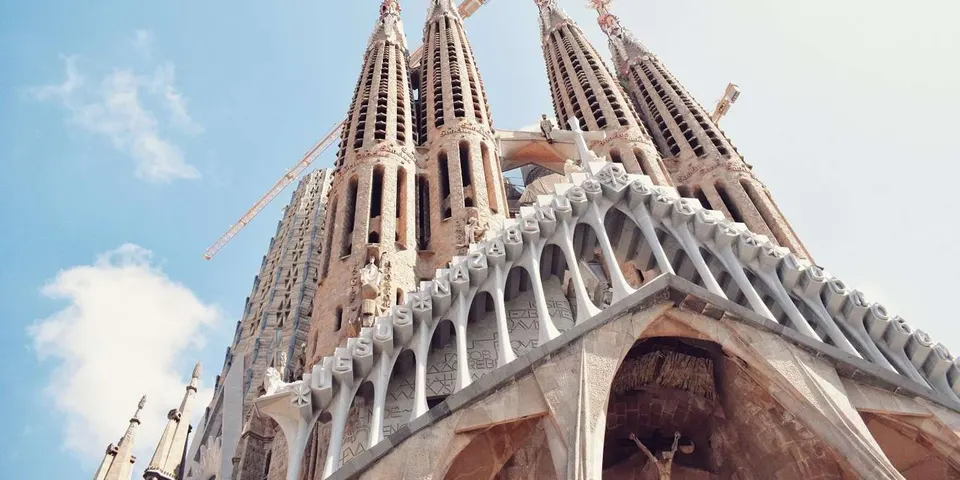
On a clear winter afternoon, sunlight comes through the Sagrada Família's huge red and orange windows and spills across the pale stone columns, so Gaudí's forest-like interior seems to glow from inside. Many visitors are surprised that winter is one of the best seasons to see it. The low afternoon sun throws strong patterns of coloured light, especially in the weeks around the December solstice.
Timing matters. Arrive too early and you see a different set of colours; arrive too late and the daylight is already fading. You don't need a photography tour or a tower ticket for any of this, just a sensible entry time and enough room in your day to enjoy the building.
What is the best time to visit Sagrada Família in winter?
For warm red and orange light, go in the afternoon, ideally with a ticket for around 3:00–3:30 p.m. in November, December or January. In February, around 3:30–4:00 p.m. can work, but leave plenty of time before the normal 6 p.m. closing. The effect depends on sunshine, the date and the angle of the sun, and no time slot guarantees bright projections of colour.
| Your priority | Suggested time | Why |
|---|---|---|
| Red and orange stained glass | Mid-to-late afternoon | The Passion-side windows face west |
| Solstice light | The weeks around 21 December | The low winter sun can shine straight through the warm-toned windows |
| Blue and green stained glass | Morning | The Nativity-side windows face east |
| A quieter, contemplative visit | Early weekday morning | It can feel calmer, although crowd levels vary |
| First visit with the audio guide | Allow 90 minutes to 2 hours | Time for the nave, the museum and the architectural details |
| Architecture with a guide | Morning or early afternoon | Follow the tour, then explore on your own |
Our recommendation: on a clear winter day, book an afternoon entry with at least 90 minutes left before closing. The basilica has far too much to see to rush through it for one photograph.
Why the stained glass looks so remarkable in winter
Gaudí treated the movement of natural light as part of the architecture. The windows change how the building feels as the sun moves across the sky during the day and through the seasons. The basilica's own blog explains the colour scheme in its stained-glass guide.
Morning: cooler blues and greens
The east-facing Nativity side has the cooler colours: blue, green and the freshness of morning. On a bright morning these windows give the nave a calm feeling. Choose this time if you prefer a contemplative visit, gentler light, or a morning slot that leaves your afternoon free for somewhere else.
Afternoon: glowing reds and oranges
The west-facing Passion side is dominated by reds, oranges and yellows. As the sun reaches these windows, patches of colour move across the columns, floors and vaulted ceiling, and they stand out strongly against the neutral stone.
For photographs, don't look only at the windows. Turn around and look for colour falling on the columns opposite: the light on the stone often makes a better picture than the glass it came through.
What happens around the winter solstice?
Around 21 December 2026 the sun follows its lowest arc across Barcelona's sky, and the basilica's architectural blog describes especially intense afternoon light through the Passion-side windows at this time of year. It's a seasonal effect that lasts days and weeks, not a timed show on one date.
Cloud cover changes everything. A bright afternoon a few days either side of the solstice can be far more spectacular than a rainy 21 December.
Best entry times by month: November 2026 to February 2027
Barcelona's sunset moves quickly through the winter, but from November to February the basilica's regular tourist hours end at 6 p.m., with shorter hours on several holidays.
| Month | Reference sunset | Suggested afternoon entry | Notes |
|---|---|---|---|
| November 2026 | 15 Nov: about 5:31 p.m. | 3:00–3:45 p.m. | Winter-like afternoon light and short days |
| December 2026 | 21 Dec: about 5:24 p.m. | 3:00–3:45 p.m. | The best chance of strong solstice light |
| January 2027 | 15 Jan: about 5:46 p.m. | 3:00–4:00 p.m. | Low sun, with the days slowly getting longer |
| February 2027 | 15 Feb: about 6:24 p.m. | 3:30–4:00 p.m. | Sunset comes after the normal closing time |
Sunset times are Barcelona local time, from timeanddate.com. The entry windows are our planning suggestions, not officially measured times for the strongest coloured light.
November
Sunset is around 5:45 p.m. at the start of November and moves to about 5:20 p.m. by the end of the month. For a first visit, I'd choose a 3:00 or 3:30 p.m. ticket and spend time with the audio guide before turning back to the stained glass. November is also comfortable for sightseeing outside, without the summer heat. Our November 2026 guide covers the weather, crowds and the centenary events that month.
December
December is the month light-lovers tend to aim for. Sunset stays close to 5:20–5:30 p.m. and the low sun can produce spectacular effects on the Passion side. A ticket around 3 p.m. gives you flexibility. Don't plan this on 25 or 26 December: tourist visits end at 2 p.m. on those days. Our guide to Sagrada Família in December 2026 covers the Christmas hours, crowds and events.
January
The low winter light carries on after Christmas while the days slowly lengthen. Around mid-January the sun sets at roughly 5:45 p.m. (our January and February 2027 guide has the sunset for each week). A 3 p.m. ticket works well if you want time for the museum too. 1 and 6 January close at 2 p.m., so choose another date if the late-afternoon light is your priority. Our Christmas and New Year opening hours guide lists every holiday date.
February
With longer days, February suits a fuller sightseeing trip around Barcelona. By the middle of the month the sun sets after the basilica's 6 p.m. closing, so you can still see lovely afternoon effects but won't watch the sunset itself from inside. Choose a mid-afternoon entry with time to spare, not the last slot of the day.
Is morning or afternoon better?
Choose the morning for blue-green light, a more reflective atmosphere and, often, a less hectic start to your day. On normal visiting days, entry starts at 9 a.m. Monday to Saturday and at 10:30 a.m. on Sundays. Since February 2026, a 9–10 a.m. quiet hour asks visitors to keep silent and listen to audio through earphones.
Choose the afternoon for the famous warm red and orange windows, particularly near the December solstice. The drawback is that popular afternoon times draw other photographers and visitors. If the only afternoon slot left gives you very little time before closing, take an earlier visit instead of rushing. Our year-round best-time guide compares the months outside winter. If you're adding a tower, our guide to which tower in winter matches Nativity and Passion to a morning or afternoon visit.
Where should you stand for the best light?
- The main nave: start beneath the branching columns and look towards the Passion-side windows. The scale and symmetry show why Gaudí's design is compared to a forest.
- Opposite the Passion windows: look for sunlight projected in colour onto the columns, floors and pale stone.
- Beneath the vaults: look up to see how the height, the geometry and the reflected light work together.
- Towards the Nativity windows: compare the warm tones with the blues and greens on the opposite side.
Spend a few minutes without your phone. A photo captures a fraction of the changing light, and standing inside it feels different. The interior guide explains what you're looking at in the nave, the apse and the museum.
How long should you spend inside?
Allow 90 minutes to two hours for a satisfying first visit. You can walk the official standard route in around an hour, but the building rewards a slower pace. A comfortable 3 p.m. visit might look like this:
| Time | Plan |
|---|---|
| 2:45 p.m. | Find the correct entrance and get ready for security |
| 3:00 p.m. | Enter at your booked time |
| 3:15–4:00 p.m. | Main nave and audio guide |
| 4:00–5:00 p.m. | Stained glass, columns and the changing light |
| 5:00–5:40 p.m. | Museum and the remaining open areas |
| Before 6 p.m. | Leave, following the closing instructions |
Individual areas can close before the building as a whole. Adjust the plan to your actual entry slot and any special events.
Which ticket is best for the stained glass?
You don't need a tower ticket. The famous stained-glass light is in the main basilica, and standard admission includes it.
| Official adult ticket | Official price | Best for | Our pick on GetYourGuide |
|---|---|---|---|
| Basilica and audio guide | €26 | Independence and photography | Entry Ticket with Audio Guide, from $39, 4.6/5 from 120,000+ reviews |
| Basilica and official guided tour | €30 | Architectural background at good value | Skip-the-Line Entry Ticket & Tour, from $79, 4.8/5 from 15,000+ reviews |
| Basilica and one tower | €36 | Extra views over the city | The Entry Ticket with Audio Guide with its Nativity or Passion tower option |
| Guided tour and one tower | €40 | A guide plus the views from above | Small Group Tour with Optional Tower Access, $133 with the tower option, 4.6/5 from 1,250+ reviews |
Official prices checked October 2026 and subject to change. GetYourGuide prices are from-prices in US dollars and come with free cancellation; official tickets are cheaper but generally can't be changed.
The €26 ticket includes the main nave, the museum and the official audio guide app. For €4 more, the official guided option adds about 50 minutes of explanation. If you enjoy expert commentary, the upgrade is good value; if you want to linger at the windows, the independent ticket gives you the most freedom. The guided tour vs audio guide comparison goes through the trade-off in detail.
The towers are a separate experience: a lift up, the stairs down, and access that depends on the weather. They don't improve your view of the light inside the nave.
Booking: official individual tickets are sold at sagradafamilia.org. A third-party tour is only worth the extra cost when it adds something you want, such as your preferred guide language, a smaller group or a combined attraction. Every option and discount is in our ticket guide, which has a winter section with a booking calendar by date and the concessions.
What if it's cloudy or raining?
The stained glass is still beautiful, but you need direct sun for the sharp patches of colour; overcast weather softens the light inside. Rain is not a reason to cancel, because the main visit is indoors and the architecture is just as extraordinary.
If tickets are still available and you're in Barcelona for several days, a short-range forecast can help you pick the day. Tickets are timed, though, and usually hard to change, so don't give up a confirmed visit waiting for perfect weather. Towers can close in unsafe conditions.
Photography tips that make a difference
- Photograph the projection, not only the window. Colour falling on the columns makes a strong composition.
- Lower the exposure on your phone when the bright windows wash out against the darker interior.
- Include the architecture: a wide frame shows the scale of Gaudí's branching columns.
- Take several shots: the patterns move as the sun changes position.
- Follow the rules: personal photography has restrictions, tripods and professional equipment are restricted, and commercial or publication use may need the Foundation's written authorisation. The visitor rules guide lists them.
- Respect worshippers: don't interrupt prayer or religious services to take photographs.
Practical information for winter visitors
Opening hours
| Day | Regular November–February tourist hours |
|---|---|
| Monday to Saturday | 9 a.m. to 6 p.m. |
| Sunday | 10:30 a.m. to 6 p.m. |
| 25 and 26 December | 9 a.m. to 2 p.m. |
| 1 and 6 January | 9 a.m. to 2 p.m. |
Special ceremonies, maintenance and events can change access. Always check the official opening-hours page before you go.
Getting there and entering
Address: Carrer de Mallorca, 401, 08013 Barcelona. Sagrada Família metro station is on lines L2 and L5. Individual visitors are usually directed to the Nativity façade side, on Carrer de la Marina. Follow the exact directions on your ticket.
What to bring
Bring your named ticket, official photo ID, a charged phone and earphones for the audio guide app. Wear comfortable shoes and winter layers, and remember that your clothes have to meet the dress code of an active Catholic church. Large suitcases can't be stored in general visitor lockers, and the tower lockers are only for the tower visit.
Accessibility
The main basilica visitor areas are accessible, with designated arrangements on Carrer de la Marina. The tower routes are not accessible to wheelchair users, because they involve walking down stairs. Check the official FAQs for the current assistance and documentation rules.
Can you leave and come back?
No. Normal tourist admission doesn't allow re-entry once you've left the controlled visitor area, so finish the museum and your photographs before you go.
Sagrada Família in winter: FAQ
What is the best time for red and orange stained glass?
Usually the afternoon, with an entry around 3:00 to 3:30 p.m. on many dates from November to January. How strong the colour is depends on direct sun and the angle of the sun on your date.
Is December the best month?
December has some of the most striking light of the year in the weeks around the winter solstice, but a clear day in November or January can look better than an overcast December afternoon.
Is 4 p.m. too late in December?
Not necessarily, because the sun sets around 5:20 to 5:30 p.m. A 3 p.m. entry is better if you want an unhurried first visit with time for the museum and audio guide.
Can you see the sunset from inside in February?
Not the sunset itself on normal winter hours: for much of February 2027 the sun sets after the usual 6 p.m. closing time.
Is the stained glass beautiful on cloudy days?
Yes. The windows keep their colours, although the sharp patches of projected light are usually weaker in diffuse light.
Do I need a tower ticket?
No. The stained-glass interior is included in ordinary basilica admission.
Do tickets sell out in winter?
Popular times can be unavailable even in quieter months. Official tickets usually go on sale about two months ahead, so book once your dates are settled.
Can I see it for free during Mass?
The regular international Masses are free, subject to capacity, but worship is not a sightseeing visit and does not include the museum or time to explore.
Are professional photographs allowed?
Commercial and publication photography may need advance written authorisation from the Foundation. Check its rules before using images on a monetised website.
Winter isn't a compromise at the Sagrada Família. If you love architecture and natural light, it's one of the best seasons to go. Book a mid-afternoon time with a good margin before closing, stay flexible about the weather, and don't spend the whole visit behind your camera. Even if the light never turns golden, you're still standing inside one of Barcelona's most extraordinary buildings. Check the official ticket calendar for your dates, because popular afternoon slots go first.
Sources and further reading
- Official stained-glass article
- Official opening hours
- Official prices
- Official visitor FAQs
- Visitor rules
- Barcelona sunrise and sunset times
Last reviewed 15 October 2026. The entry windows are editorial guidance, not guaranteed times for the light. Recheck prices, opening hours and events before you travel.