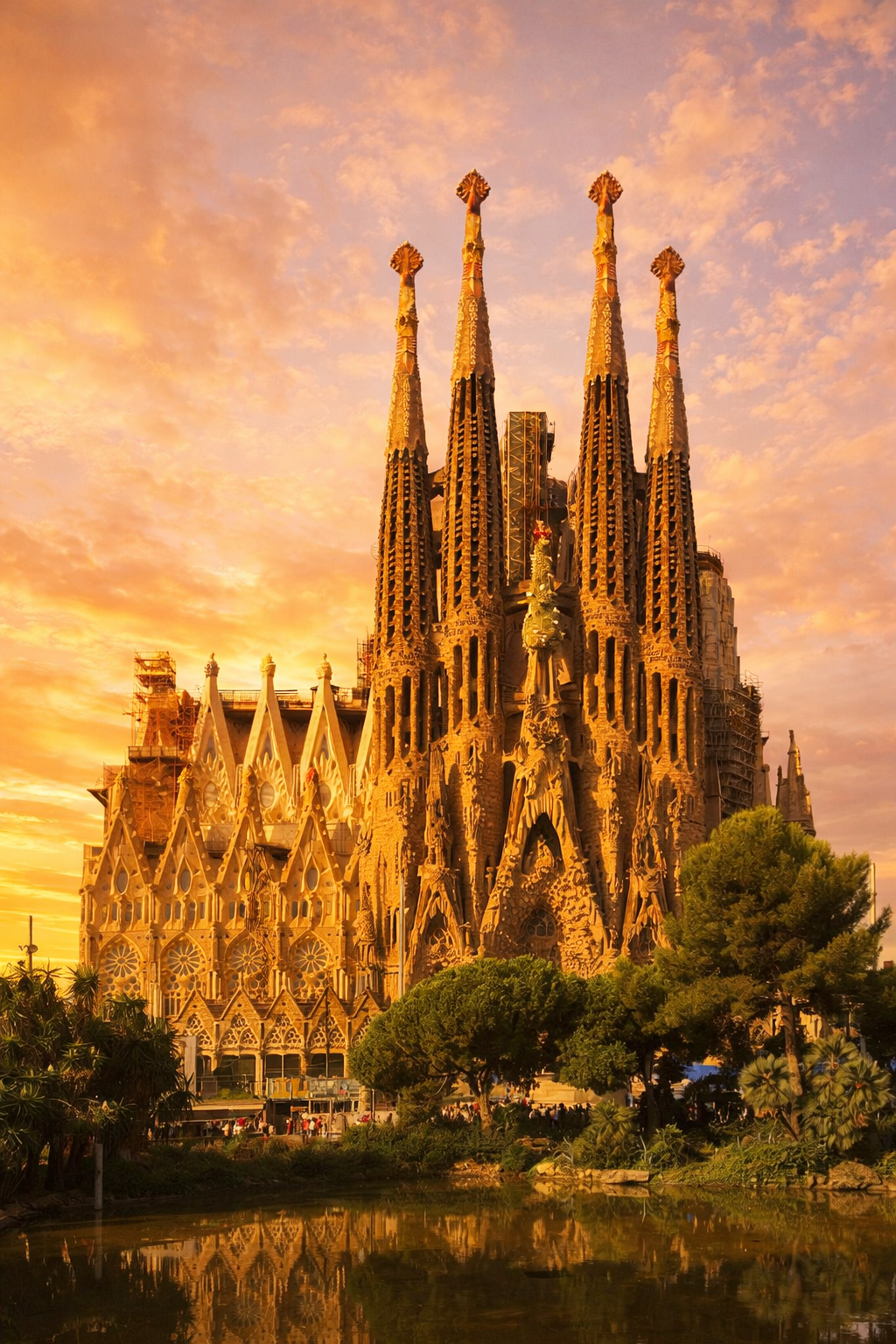
Can you go up the towers at Sagrada Familia?
Yes, but only with a specific tower-access ticket or a guided tour that includes it. Standard basilica admission does not automatically include tower entry. All tickets are sold online only — there is no counter at the venue.
How much does a Sagrada Familia tower ticket cost?
Tower access costs €36 per adult when booked on the official sagradafamilia.org website — €26 for the basilica plus a €10 tower surcharge. Students, under-30s, and seniors pay slightly less; children under 11 enter free. Adding a guided tour brings the official total to €40. Third-party platforms charge more but offer guided interpretation and easier rescheduling. The €10 tower surcharge is the same across all ticket tiers.
Is the Sagrada Familia the world's tallest church?
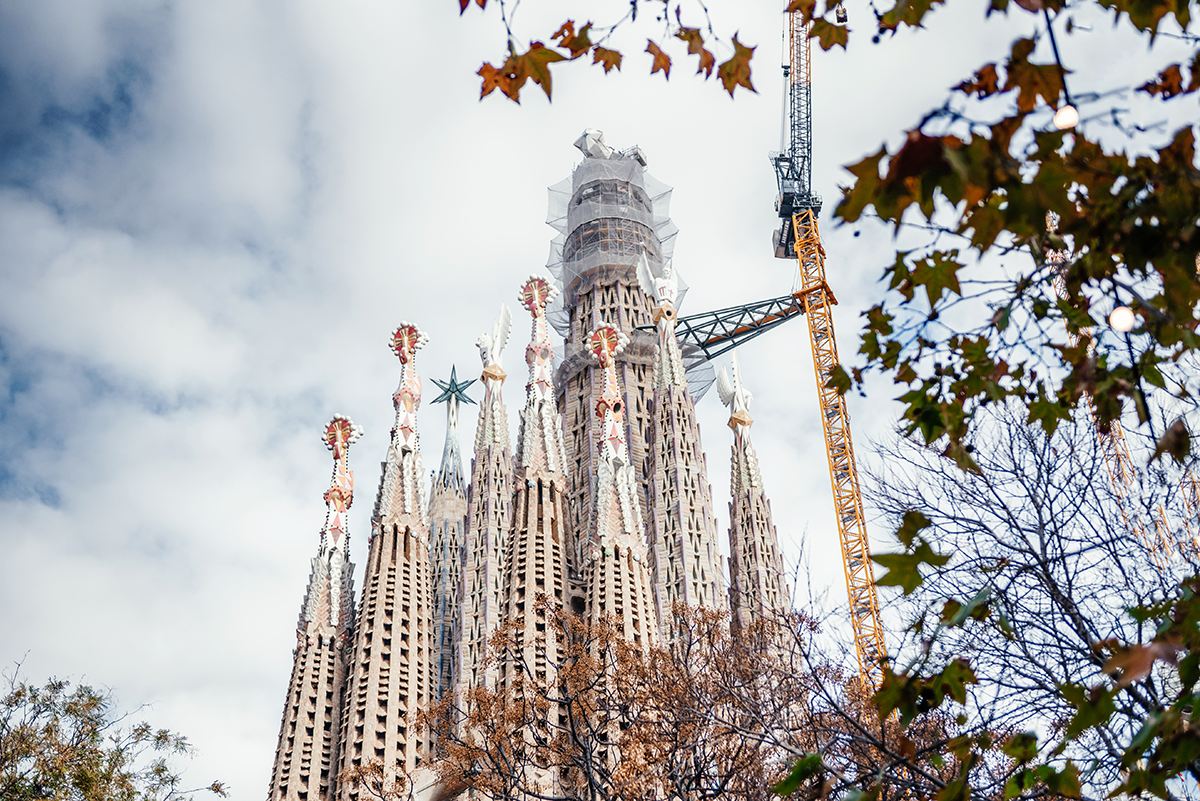
Yes, as of February 20, 2026. The Tower of Jesus Christ reached 172.5 meters on that date, making the Sagrada Família the world's tallest church — surpassing Germany's Ulm Minster at 161.5 meters. A formal inauguration mass is planned for June 10, 2026, the centenary of Gaudí's death. The central tower is not yet open to visitors. Only the Nativity and Passion facade towers have public access — but both are visible from those towers during the visit. For the full picture of what's built and what's still under construction, see our construction status guide.
What is inside the towers?
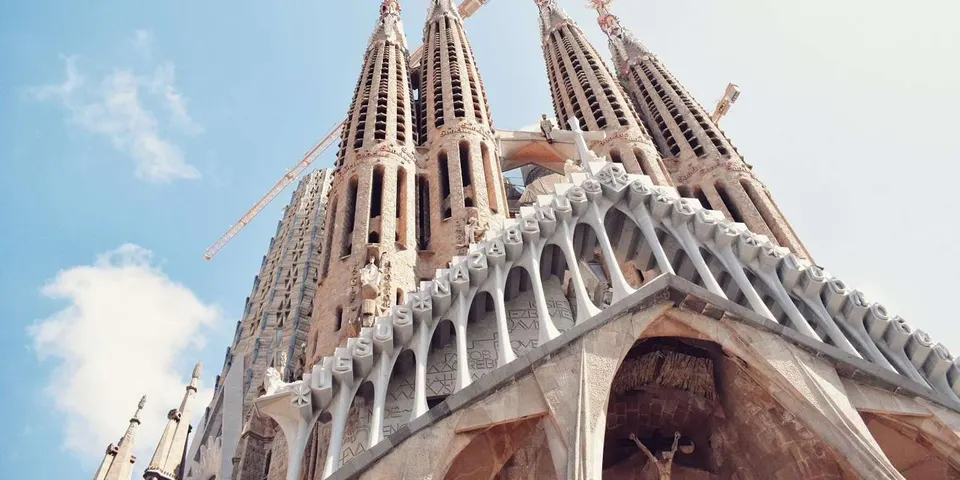
The experience is an elevator ascent, elevated viewpoints, narrow internal passages, and a spiral staircase descent through the tower structure. On the Nativity side, the highlight is a stone bridge between two towers at ~60 meters — Gaudí's original carved stonework within arm's reach. The staircase has rhomboid-shaped wall openings that frame the city and let in light. It feels more architectural than museum-like.
What do you actually see from the top?
From the Nativity tower (east): Barcelona's Eixample grid, the Torre Glòries skyscraper, and on clear days the Mediterranean Sea. From the Passion tower (west): Montjuïc Hill, the Gothic Quarter cathedral, and the Collserola mountain range. From both, you see the fruit pinnacles, the ongoing construction of the central towers, and architectural details that are invisible from ground level. The appeal is the unusual vantage point, not just the panorama.
How high are the Sagrada Familia towers for visitors?
Nativity tower viewing platform: approximately 55 meters (180 ft). Passion tower viewing platform: approximately 65–75 meters (213–246 ft). These are the elevator ascent heights — the absolute tops of the towers are higher but not publicly accessible.
Are the Sagrada Familia towers worth it?
Usually yes if you enjoy architecture and can manage the stairs down. The €10 surcharge is modest for what is genuinely a one-of-a-kind experience — particularly the Nativity bridge walk. If you mainly want the church interior or the widest possible city view, the towers are less essential. Bunkers del Carmel (free) and Park Güell (€10) both offer broader panoramas if views alone are the goal.
Which tower is better: Nativity or Passion?
Nativity is the better all-around pick for first-timers: the stone bridge at ~60 m and Gaudí's original carved detail are unique to this side. Passion wins on height (~65–75 m vs ~55 m) and afternoon light. Visit Nativity in the morning (9–11 AM) and Passion in late afternoon (4–6 PM) for ideal conditions on each side. Neither is a wrong choice.
Which tower is better for photos?
Nativity in the morning (9–11 AM) for Gaudí's carved surfaces in clean, cool light. Passion in late afternoon (4–6 PM) for golden hour across the western cityscape. Both allow photography throughout — on platforms, the bridge, and the staircase. The downward spiral shot through the open center of the staircase is the most photographed moment. Flash is prohibited. Some Nativity staircase sections are quite dark — a phone or camera with good low-light performance helps. Tripods and selfie sticks are not allowed on the towers.
How does the tower view compare to other Barcelona viewpoints?
The towers deliver architectural intimacy at height, not the widest panorama in the city. Bunkers del Carmel (free) offers a 360° view over all of Barcelona. Park Güell (€10) gives open views toward the sea. Tibidabo is the highest overall point. The Sagrada Família towers are best understood as being inside Gaudí's design — close to stonework and construction in progress — rather than a conventional observation deck.
What is the best time to visit the Sagrada Familia towers?
The first slot of the day (9:00 AM) is consistently the least crowded. Crowds peak between 10:00 AM and 1:00 PM. Late afternoon (4:00 PM onward) is also relatively quiet. Tuesday through Thursday see fewer visitors than weekends. November through February is the lightest season overall. Note: 9:00–10:00 AM is a quiet hour — visitors are asked to remain silent and use headphones for audio content.
Do you take stairs or an elevator?
You normally take an elevator up and stairs down. There is no standard return elevator for visitors. In genuine medical distress at the top, staff may allow emergency elevator use — this is not guaranteed and cannot be relied upon.
How many steps are there?
Approximately 340 steps on the Nativity side and roughly 426 on the Passion side. At a comfortable pace the descent takes 10–15 minutes. The stairs are narrow, single-file, and have an open center — plan accordingly if you have concerns about heights or enclosed spaces.
Is it safe if I am afraid of heights?
The towers are managed and controlled, but the experience can still feel uncomfortable. The staircase has an open center with only a low stone balustrade between you and a long drop. If heights, enclosed spirals, or looking down a shaft concern you significantly, skip the towers and spend more time in the basilica interior instead.
Can kids or elderly people go up?
Children under 6 are not allowed. Ages 6–16 must be accompanied by an adult. Some elderly visitors report being asked to demonstrate physical agility (a short jump test) before boarding the elevator — those who cannot proceed receive a refund for the tower portion. The issue in all cases is the staircase descent, not the elevator up.
What bags can I bring up the towers?
All bags and rucksacks must go in lockers at the tower base before ascending — strictly enforced. Bring a €1 coin (lockers are coin-operated, daypack size only). Tripods, selfie sticks, and large camera equipment are not allowed on the towers. There is no large-luggage storage on-site; use external storage nearby if you are arriving with a suitcase.
Is there a dress code at Sagrada Familia?
Yes. Shorts and skirts must reach at least mid-thigh, and see-through clothing, swimwear and bare feet are not allowed; hats come off inside except for religious or medical reasons. Bare shoulders are officially banned only in the Chapel of the Holy Sacrament, but security at the entrance often asks visitors to cover up, so carry a light scarf. No cover-ups are provided at the door, and timed tickets are generally not refunded if you are turned away. See the full dress code and visitor rules.
Do I need a special ticket for the towers?
Yes. Tower access is a separate booking option or part of a specific guided tour product. If you only buy basic admission, the towers are not included. Check the "Includes" section of any tour listing carefully — some tours name towers in the title but make them a conditional upgrade in the booking terms.
How do I confirm tower access is actually included in my tour?
Look at the "Includes" section of the listing, not just the title. Confirmed tower access states something like "Access to the towers on the Passion facade" or "Sagrada Towers Entry Ticket" with no conditional language. If the listing says "if option selected" or "if chosen," the base booking price does not include towers — you need to select the ticket option that includes towers at checkout.
Do tower tickets sell out?
Yes, regularly. During peak season (June–September), slots sell out 2–3 weeks ahead. Shoulder season (March–May, October–November) typically requires at least one week. Book online as soon as your travel dates are confirmed. If your preferred tower is sold out, try the other facade or a different time slot — they sell independently.
Can you visit the towers with a guided tour?
Yes, and that is often the easiest way to book them. Guided products combine timed basilica entry, interpretation inside, and the tower-access component in one reservation. Note: the tower portion itself is always self-guided — no guide accompanies you up the elevator or down the staircase, regardless of ticket type.
Do guided tours guarantee tower entry?
Confirmed-tower tours generally include reserved tower access. Weather and technical issues can still affect operations on the day. Always read the booking conditions — particularly around weather closures and compensation policy. The small-group tour (Tour 1 above) offers a €10 refund per person if the towers close.
What happens if the elevator breaks or weather changes?
Towers may close for safety or maintenance with little notice. Rain and strong wind are the most common triggers — checking the forecast before your visit is practical advice most guides skip. When closures occur, the basilica visit typically continues. The Sagrada Família refunds the ~€10 tower surcharge, though some visitors report needing to follow up by email. Third-party providers have their own policies — read those terms before booking.
How do I get to Sagrada Familia?
The address is Carrer de Mallorca 401, L'Eixample, 08013 Barcelona. The nearest metro is Sagrada Família station, served by lines L2 (purple) and L5 (blue) — the entrance is a 5-minute walk. Parking in the surrounding Eixample streets is very limited; metro or taxi is recommended. Arrive at least 20 minutes before your booked entry time.
How long does the tower visit take?
Plan roughly 30 to 45 minutes for the tower segment on top of your basilica visit. A self-guided basilica visit typically takes 1–1.5 hours; a guided tour adds 30–50 minutes on top of that. Budget 2–2.5 hours total for a combined self-guided basilica and tower visit, or up to 3 hours if you include a guided tour and the museum.